
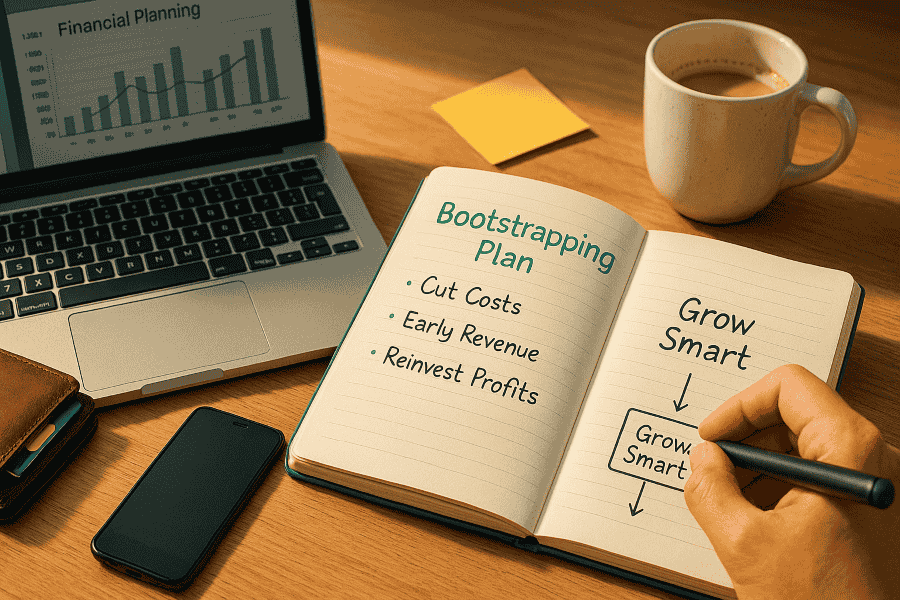
A founder with limited cash learns fast which ideas deserve oxygen and which ones only looked smart on a whiteboard. That pressure can feel unfair, but it also creates sharper judgment. The best business growth strategies for a self-funded company start with one rule: cash must return faster than ego spends it. For U.S. small business owners, that means selling before hiring too much, keeping offers plain enough for customers to understand, and building trust through steady visibility, whether that comes from referrals, local partnerships, search traffic, or a credible business visibility partner like PR Network. Outside investment can speed a company up, but it can also hide weak demand. Bootstrapping does the opposite. It forces the market to vote early. You do not grow because a pitch deck says you might. You grow because customers keep paying, margins hold, and each next step earns its own funding.
Cash Discipline Comes Before Bigger Plans
Bootstrapping is not cheapness dressed up as strategy. It is the discipline of making money useful before making it loud. A funded company may hire for what it hopes will happen six months from now. A self-funded business has to earn the next move. That sounds limiting until you see the hidden benefit: fewer vanity choices survive.
The friction shows up early. You want better software, a larger team, paid ads, new branding, and maybe a nicer office. The counterintuitive truth is that saying no to most of those things can make the company stronger. You begin to ask a better question: “Will this bring cash back, save time, or reduce risk soon enough to matter?”
Start With a Cash Map, Not a Dream Budget
A dream budget begins with what the company would buy if money were easy. A cash map begins with what money must do next. For a bootstrapped company, that difference can decide whether growth feels steady or chaotic.
Write down every recurring cost, every expected payment, and every delay between doing the work and receiving the cash. A small web design studio in Ohio may look profitable on paper, but if clients pay 45 days late while contractors need payment in 7 days, the owner is not managing profit. They are managing a timing trap.
Customer-funded growth depends on timing as much as revenue. That is why retainers, deposits, milestone billing, prepaid packages, and annual plans matter. They do not make the business fancy. They make it breathe.
A simple rule works well: do not add a fixed monthly cost until current revenue can cover it for several months without hope, luck, or one big client. Hope makes poor payroll math.
Reinvest Profits Where They Remove Bottlenecks
Reinvestment sounds easy when people say it from a stage. In real life, the owner wants to take money home, pay down debt, upgrade tools, and fund marketing at the same time. The answer is not to starve yourself. The answer is to choose one bottleneck at a time.
A local HVAC company in Texas might not need more leads at first. It may need a faster scheduling process, because missed calls and slow quotes are killing revenue already in reach. A solo consultant might not need a logo refresh. She may need a part-time assistant to clean up invoicing and follow-ups.
This is where bootstrap funding becomes practical. You reinvest in the point where money leaks out or gets stuck. Better quoting. Faster delivery. Cleaner bookkeeping. A sales script that closes higher-quality customers. None of it sounds glamorous, but it compounds.
For owners who need a basic funding reference, the U.S. Small Business Administration guidance on funding your business explains self-funding as one path among several. The real lesson is not that every founder should use personal money. It is that every founder should know the cost, risk, and control tradeoff before taking any money at all.
Business Growth Strategies That Turn Cash Into Momentum
Once the company has cash discipline, growth should move toward revenue that pays for more revenue. That is the core arc of a bootstrapped business. You do not chase every channel. You find the few actions that create sales without draining attention, then repeat them until the market gets bored or the numbers weaken.
The friction is patience. Organic business growth can look slow beside a competitor buying attention with investor cash. But slow is not the same as weak. A self-funded company that learns how to win customers profitably owns a skill that money alone cannot buy.
Sell the Narrow Offer Before Expanding the Menu
Many owners expand because they fear missing sales. They add services, tiers, bundles, add-ons, and custom options until the offer becomes hard to explain. Customers do not buy confusion. They delay it.
A bootstrapped business usually grows faster after it narrows the offer. A bookkeeping firm for small restaurants in Florida has a clearer path than “accounting services for everyone.” A home cleaning company that sells move-out cleaning to apartment renters in Dallas can build a repeatable system before adding office cleaning, deep cleaning, and Airbnb turnover work.
This does not mean you stay small forever. It means you earn expansion by proving demand. One narrow offer gives you cleaner marketing, faster referrals, tighter operations, and fewer delivery mistakes.
Customer-funded growth starts when the customer understands the value without a long explanation. The easier the offer is to repeat at a kitchen table, a networking event, or a Google search box, the better.
Make Existing Customers the Cheapest Growth Channel
The most overlooked growth source is the person who already trusts you. Many bootstrapped owners spend too much time chasing strangers while past buyers sit untouched in an email list, invoice history, or phone contact sheet.
A lawn care business in North Carolina can sell seasonal cleanup to mowing customers. A small software company can offer setup help, training, or priority support to current users. A boutique marketing agency can turn one project into a quarterly plan if the result helped the client make money.
Referrals also need less awkwardness than owners assume. You do not have to beg. Ask at the moment of satisfaction, make the request specific, and give the customer simple language to share.
Try this: “Do you know another business owner who needs the same result we helped you get?” That sentence beats a vague “Keep us in mind.” It gives the customer a clear mental picture.
For deeper planning around repeat buyers, connect this section to your future customer retention strategy. Retention is not a soft metric. For a self-funded company, it is often the cheapest growth engine in the building.
Marketing Should Earn Trust Before It Chases Reach
Marketing without outside capital has to work harder because waste has nowhere to hide. A big ad budget can buy tests, cover weak messaging, and make bad offers look active. A bootstrapped company cannot afford that fog. Every channel needs a job.
The tension here is visibility. You need people to know you exist, but chasing every platform can drain the owner. The non-obvious move is to stop asking, “Where should we post?” and start asking, “Where does trust form before purchase?” That answer changes the marketing plan.
Build Search and Local Proof Around Buying Questions
Search traffic rewards useful answers over time. For many U.S. small businesses, that means writing around buyer doubts, not company news. A plumbing company should answer pricing, emergency timing, permits, water heater choices, and signs of hidden leaks. A B2B service firm should answer risk, cost, timelines, and comparison questions.
Organic business growth often begins with these unglamorous pages. They catch customers while intent is alive. The page does not need drama. It needs plain answers, local context, and proof that you know the problem.
Local proof matters too. Reviews, photos, service-area pages, case notes, and clear contact details help a small company feel safer. A customer in Phoenix choosing between two contractors may not read every word. They will scan for signs that the business has done this work nearby and can be reached without friction.
For site planning, this connects well with a future local SEO content plan. Search is not magic. It is organized helpfulness, published before the customer panics.
Use Partnerships That Trade Access, Not Equity
Partnerships can act like quiet growth loans. No investor. No equity loss. No board pressure. A good partner already has access to the audience you need, and you already have value for their audience.
A meal prep company can partner with local gyms. A tax preparer can build referral ties with real estate agents and payroll providers. A children’s tutoring service can work with pediatric therapy offices, parent groups, and private schools. The trick is to avoid lazy “collabs” that create likes but no sales path.
A useful partnership has three parts: a shared audience, a clear offer, and a trackable next step. Without those, it becomes noise with polite smiles.
Bootstrap funding improves when partners reduce acquisition cost. One workshop, one co-branded checklist, or one referral agreement can beat weeks of scattered posting. The partner does not have to be famous. They need trust with the right people.
This is why small businesses often have an edge over national brands. Local relationships carry texture. People know who shows up, who returns calls, and who disappears after payment.
Operations Must Protect the Growth You Create
Growth creates strain before it creates comfort. More customers mean more handoffs, more mistakes, more questions, and more chances for the owner to become the bottleneck. A bootstrapped company cannot solve every strain by hiring fast. It needs cleaner operations first.
The friction can feel personal. Owners blame themselves for being tired, behind, or scattered. Often the real problem is that the company grew on memory instead of systems. The fix is not corporate theater. It is a few repeatable habits that protect delivery.
Turn Repeated Work Into Simple Operating Rules
Every repeated task deserves a simple rule. Not a thick manual. A rule. How do leads get logged? When do quotes go out? What happens after a sale? Who follows up if payment is late? What gets checked before delivery?
A small catering company in Georgia may prevent half its problems with one event checklist. Guest count confirmed. Allergy notes captured. Deposit paid. Delivery window set. Staff assigned. Final call scheduled. That checklist may not look like growth, but it protects the reputation that creates growth.
Customer-funded growth falls apart when service quality drops. A business that wins ten new customers and disappoints four of them did not grow cleanly. It borrowed trouble from next month.
Systems also make hiring safer. If the process exists before the person arrives, the new hire improves the company faster. If no process exists, the owner pays someone to inherit confusion.
Measure Fewer Numbers and Act Faster
Bootstrapped owners often track either too little or too much. Too little creates guessing. Too much creates paralysis. The better path is to choose a small set of numbers that point to action.
Start with cash on hand, gross margin, lead source, close rate, repeat purchase rate, and delivery capacity. A retail shop may add inventory turn. A service firm may add booked weeks ahead. A subscription company may add churn. Keep the list short enough that you will read it.
The counterintuitive part is that some growth signals should scare you. A rising lead count means little if close rate falls. Higher revenue can hurt if margins shrink. A packed calendar can weaken the business if the owner has no recovery time and customers wait longer.
Numbers should change behavior. If one marketing channel brings cheap leads that never buy, cut it. If one service has lower revenue but higher margin and fewer headaches, promote it harder. If late invoices keep choking payroll, change payment terms.
Organic business growth becomes safer when you trust patterns, not moods. The owner’s gut still matters, but the numbers keep it honest.
Conclusion
A self-funded company grows best when it treats every dollar like a worker with a job. Some dollars should bring in customers. Some should speed up delivery. Some should sit untouched so one bad month does not turn into panic. That kind of discipline may not look exciting from the outside, but it gives the owner something rare: control with evidence.
The smartest business growth strategies do not ask you to act smaller. They ask you to grow in the right order. Sell the narrow offer first. Let customers help fund the next step. Build trust where buyers already look. Fix operations before demand outruns quality.
Outside investment can help certain companies, but it is not proof of strength. A bootstrapped business proves strength through paid demand, clean margins, repeat buyers, and calm decisions under pressure. Start there, and growth becomes less like a gamble and more like a system you can keep improving. Choose one cash leak, one offer, or one customer follow-up this week, then make it sharper before chasing anything new.
Frequently Asked Questions
How can a small business grow without outside investment?
Start by selling a narrow offer with clear demand, then reinvest profit into the next bottleneck. Focus on deposits, repeat buyers, referrals, local search, and partnerships. Growth feels slower at first, but each step rests on real customer money.
Is bootstrapping better than raising money for a startup?
It depends on the business model. Bootstrapping works well when startup costs are low, customers can pay early, and the founder wants control. Raising money may fit companies that need heavy research, inventory, licenses, or fast market capture.
What is the first thing to fix in a bootstrapped business?
Cash timing usually comes first. Late payments, weak deposits, loose expenses, and low-margin offers can hurt even when sales look strong. Once cash timing improves, marketing and hiring decisions become safer.
How do bootstrapped companies get customers on a small budget?
They use trust-heavy channels first. Referrals, local partnerships, search content, reviews, direct outreach, and repeat customer offers often cost less than paid ads. The goal is not maximum reach. The goal is profitable attention from likely buyers.
Can paid ads work for a self-funded business?
Yes, but only with tight limits. Test one offer, one audience, and one landing page before spending more. Track cost per lead, close rate, and profit per sale. If the numbers do not work small, they rarely work bigger.
What mistakes hurt bootstrapped business growth most?
Common mistakes include hiring before cash supports it, adding too many offers, ignoring past customers, underpricing work, and chasing visibility without a sales path. The painful part is that these mistakes often feel productive while they drain money.
How much profit should a bootstrapped company reinvest?
There is no fixed percentage that fits every business. A safer approach is to cover owner pay, taxes, reserves, and core expenses first. Reinvest what remains into the bottleneck most likely to raise profit or reduce pressure soon.
What type of business is easiest to bootstrap?
Service businesses, consulting, digital products, small software tools, local trades, content businesses, and productized services often fit bootstrapping because they can start lean. The best fit has low upfront costs, fast payment cycles, and clear customer pain.
About the Author